






Product reviews are most powerful when they’re visible at the moments customers are comparing, questioning and deciding what to buy.
Your website is one of those moments, but it’s not the only place product trust is built.
When reviews only exist on your site, they’re missing from many of the channels customers use to discover and evaluate products.
Review syndication closes that gap by sharing product-level review content across search, social commerce, retail networks and other discovery surfaces.
Product review syndication is what allows a review to move with the product. Wherever that product appears, its supporting proof can appear with it too.
That might be in Google Shopping ads, a social commerce feed, or on a retail partner website.
Syndication works by matching review data to product data. Channels use identifiers such as SKU, GTIN or MPN to recognise the same product across different surfaces, then display eligible reviews through supported feeds or integrations.
The review doesn’t need to be collected again for each destination. It can be reused because it’s connected to a specific product.
That’s different from company review distribution.
Distribution routes review requests to third-party platforms, so customers can leave feedback directly on public profiles like Trustpilot or Trusted Shops. Those reviews belong to the platform where they’re submitted. They’re not duplicated across every destination.
With product review syndication, you get more mileage from the product feedback you’ve already earned.
One verified product review can support buying decisions across multiple commerce channels, instead of only working on the page where it was first collected.
Your priority channels depend on where your products are sold, advertised and discovered. For most ecommerce businesses, product review syndication falls into five main groups.
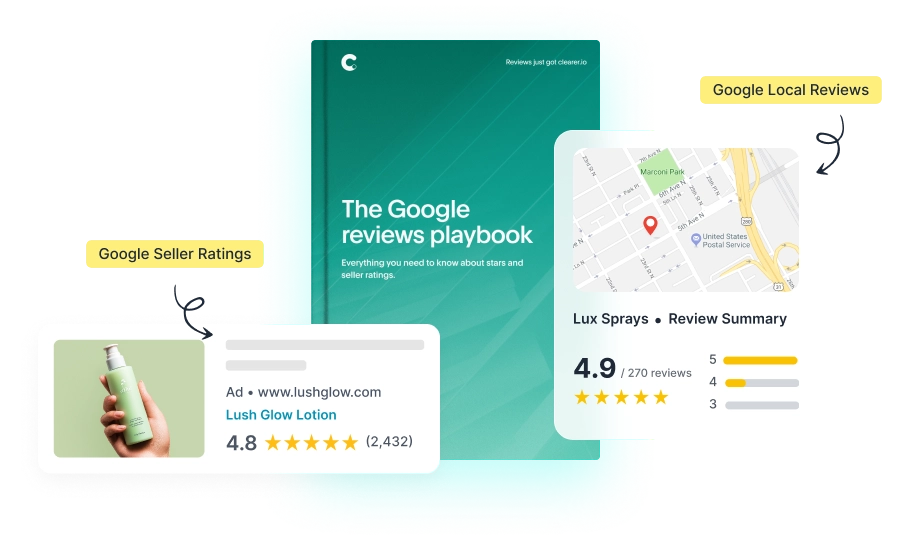
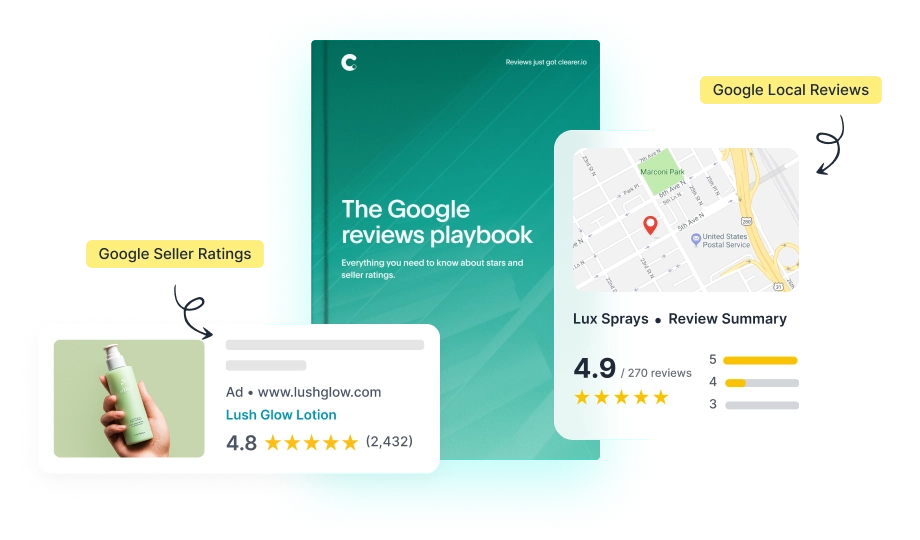
Google product reviews can appear as star ratings and review counts across Google Shopping surfaces, including product listings and Shopping ads.
Reviews are matched to the right products through your product feed, so customer feedback can show alongside key buying information like price, image and availability.
When you sync reviews to TikTok Shop, product feedback can appear directly on TikTok Shop listings, so shoppers see ratings and customer comments without leaving the platform. Reviews sit alongside product content, creator-led discovery and checkout, keeping social proof inside the same buying journey.
For brands using Meta channels, shoppable UGC experiences can also help surface product-level social proof in social environments.
Retail review syndication lets product reviews appear on retailer and marketplace product pages where your catalogue is stocked.
That could include Walmart.com or retailer websites connected through syndication networks such as Bazaarvoice.
Shop app syndication lets product reviews appear across Shopify’s Shop ecosystem, where customers can discover, track and buy from participating merchants. Reviews collected through your review platform can appear in Shop, while reviews left in Shop can feed back into your wider review programme.
For brand-owned mobile apps, product ratings and review content can also be surfaced directly within the app experience, including product pages and purchase journeys.
Multi-store review syndication lets product reviews appear across connected storefronts where the same products are sold. That could include international stores, regional websites, distributor accounts or multi-brand operations.
Reviews are matched through shared product identifiers, so feedback collected in one store can support the same product across another market, region or account.
Product reviews are eligible for syndication when the destination channel can trust the review and match it to the right product.
Most issues are set before syndication is switched on. If reviews aren’t collected with the right attribution, or your product catalogue doesn’t include the right identifiers, reviews may be available in your platform but still fail to display externally.
To show a review is connected to a completed transaction, it needs to hold verified review status.
Many syndication channels require this signal because it helps prove the review came from a genuine customer experience. Post-purchase review collection is the cleanest way to build this into your review programme from the start.
A review can only be syndicated if the receiving channel can recognise the product it belongs to.
That usually means matching through identifiers such as SKU, GTIN or MPN. These need to be consistent across your product feed, storefront, review platform and any partner listings. Missing or inconsistent product data is one of the most common reasons reviews don’t appear where expected.
Some destinations won’t display ratings until a product has enough eligible reviews.
Recency matters too. A steady flow of recent reviews gives syndication channels fresher product evidence to work with, especially for new launches, seasonal products and fast-moving catalogues.
Syndication works best when review data is clean, complete and easy for external systems to process.
That includes the rating, review text, review date, verified purchase status, product ID and any approved customer media. The stronger the structure, the easier it is for reviews to be displayed, interpreted and connected to the right product.
REVIEWS.io helps you collect, manage and syndicate product reviews from one platform, so the feedback you earn can work across more of the places customers discover and buy your products.
You can use REVIEWS.io to support product review syndication across multiple commerce surfaces, including:
Because REVIEWS.io collects reviews post-purchase by default, verified purchase attribution is built into the collection process. That gives you a stronger foundation for channels that require verified, product-level review data.
From there, syndication becomes part of a connected review strategy rather than a separate workflow. The same review programme can support product visibility across your own site, search, retail, social commerce and mobile shopping - without rebuilding review content for every channel.
Yes, as long as those reviews meet the destination channel’s requirements. Existing reviews usually need verified purchase attribution, clean product identifiers and enough product data for the channel to match them correctly.
Timelines vary by channel. Some destinations start processing eligible reviews once product matching is complete, while others need additional validation. The most common delays come from missing product identifiers, feed issues, approval requirements or products not meeting minimum review thresholds.
Yes, when the product relationship is clear. Variants, bundles and regional SKUs need consistent product data so reviews can be matched to the right item across each channel.
No. Syndicated reviews are shared through approved feeds or integrations and remain tied to the correct product. They’re not the same as manually copying review content across websites.